

When fall gives way to colder nights in Raleigh, your furnace stops being background noise and starts being essential. A system that worked fine last March may have developed worn parts, a dirty heat exchanger, or a weakened ignitor over the warmer months. Catching those issues now, before you need consistent heat, is exactly what keeps a home comfortable and a repair bill manageable.
What Should You Check on Your Furnace Before Winter?
Before winter arrives, check the air filter, thermostat function, burner flame color, heat exchanger condition, flue pipe connections, and all supply and return vents. Test carbon monoxide detectors on every floor, clear the area around the unit, and listen during the first few startup cycles for banging, rattling, or delayed ignition sounds.
The filter is the right starting point. A clogged filter restricts airflow, drives up energy consumption, and puts stress on the heat exchanger, one of the most expensive components in the entire system. Most standard 1-inch filters need replacing every 30 to 90 days once the heating season starts. The U.S. Department of Energy recommends regular filter replacement as one of the most effective steps homeowners can take to maintain furnace efficiency and reduce heating costs. Check yours monthly and swap it before it looks fully grey.
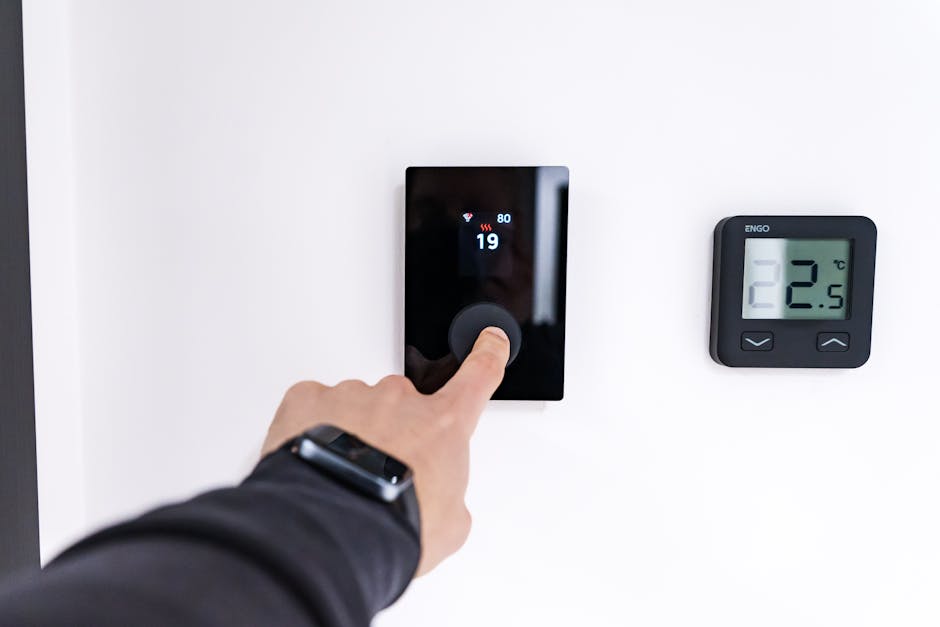
Next, run a thermostat test. Set it a few degrees above the current room temperature and confirm the furnace fires within 60 to 90 seconds. If it hesitates, cycles off before reaching temperature, or simply doesn’t respond, the problem could be the thermostat itself or the control board. Either way, it isn’t something to ignore going into December. Our electrical services team handles thermostat diagnostics and replacements alongside any other wiring concerns in your home.
Check the burner flame through the inspection window. A healthy flame burns steady blue with only a small yellow tip at the top. Yellow, orange, or visibly flickering flames signal incomplete combustion, which often means a dirty burner, a gas pressure issue, or a cracked heat exchanger. With over 20 years of industry experience across Raleigh, we’ve learned that a discolored flame is never something to put off until spring.
- Replace the air filter (standard 1-inch filters every 30 to 90 days during heating season)
- Test thermostat response and temperature accuracy
- Check burner flame color and stability through the inspection window
- Inspect all supply and return vents for obstructions from furniture or rugs
- Look at visible flue pipes for rust, gaps, or disconnected joints
- Clear at least three feet around the furnace of any stored materials
- Test carbon monoxide detectors on every level of the home
Carbon monoxide is a serious concern whenever a combustion appliance runs for extended periods. The CDC reports that unintentional carbon monoxide poisoning accounts for more than 400 deaths and tens of thousands of emergency room visits in the United States each year, with a significant share of those cases linked to residential heating equipment. Working CO detectors are not optional in any home with a gas furnace.
“Carbon monoxide (CO) is called the ‘invisible killer’ because it’s a colorless, odorless, poisonous gas. More than 400 Americans die from unintentional CO poisoning not linked to fires every year, more than 20,000 visit the emergency room, and more than 4,000 are hospitalized.”
How to Prepare Your HVAC System for Winter
Preparing your HVAC system for winter means replacing the filter, scheduling a professional tune-up, testing the thermostat, checking ductwork for leaks, clearing outdoor components, and confirming that the heat exchanger and ignition system are in good working order. A professional inspection covers what visual checks alone miss.
The most reliable preparation step is also the one most homeowners skip: scheduling a professional furnace inspection before the heating season begins. We understand the logic of waiting. If it ran fine last spring, it should run fine this fall. But furnace problems tend to develop gradually, and a system that fires up without complaint in October can fail completely by January when it’s running eight to ten hours a day under sustained load. Scheduling with our HVAC services team in early fall means we’re finding the marginal issues before they become emergency calls in the dead of winter.
Ductwork deserves attention too. Leaky ducts can waste 20 to 30 percent of the warm air your furnace generates before it ever reaches a living space. If certain rooms consistently feel colder than the thermostat setting suggests they should, duct leakage is a likely contributor. Our inspections include checking accessible ductwork runs and sealing joints where airflow losses are found.
If your home relies on a boiler for radiant heat or a water heater for hydronic systems, winter preparation extends to those units as well. Pressure levels, expansion tanks, and zone valves all need checking before cold weather arrives. Our water heater and boiler services cover those inspections as a separate visit or as part of a combined home maintenance appointment.
How Many Hours Per Day Should My Furnace Run in the Winter?
In cold weather, a properly sized furnace typically runs between 10 and 15 hours per day, broken into multiple shorter cycles of 10 to 20 minutes each. If your furnace runs nearly constantly, or cycles on and off every few minutes, something is off — whether that points to system sizing, a dirty filter, or a thermostat calibration problem.
Short-cycling is a common symptom of an oversized furnace that heats the space too quickly and shuts off before proper air distribution is achieved. It’s hard on components and tends to leave rooms feeling unevenly heated. Long, constant run times point the other direction: either the system is undersized for the home, heat is escaping through duct leaks, or outdoor temperatures have dropped far enough that the unit simply can’t keep up without running continuously.
Raleigh winters are generally mild compared to more northern climates, but stretches of nights in the mid-20s to low 30s are not unusual from December through February. During those periods, it’s normal for a furnace to run well above its average daily hours. The concern arises when heavy runtime becomes the norm even during moderate weather. That pattern almost always has a fixable cause worth investigating.
Unusual runtime patterns can also be a signal from adjacent systems. If unheated crawlspaces or utility areas are pulling temperatures down faster than the furnace can compensate, pipe insulation and weatherization are worth addressing at the same time. Our plumbing services team handles pipe insulation and winterization as part of seasonal preparation visits, and combining those appointments saves time across the board.
What Is the $5000 Rule for HVAC?
The $5000 rule is a simple repair-versus-replace guideline: multiply the age of your HVAC unit in years by the estimated repair cost in dollars. If the result exceeds $5,000, replacement is generally the more cost-effective long-term choice. It’s a rough heuristic, not a firm formula, but it gives homeowners a useful starting frame for the conversation.
A 15-year-old furnace facing a $400 repair scores 6,000 by the formula, which suggests replacement deserves serious consideration. A 6-year-old unit with the same repair scores 2,400, and the math points toward fixing it. The rule reflects a real pattern we see consistently: older systems require more frequent repairs, lose efficiency over time, and eventually reach a point where continued investment stops making sense.
The rule works best as a starting point, not a final answer. System age, maintenance history, and overall condition all factor in. A 12-year-old furnace that’s been professionally serviced every fall and has no history of major repairs is in a very different position than a 12-year-old unit that hasn’t been touched since installation.
“The $5,000 rule is a handy rule of thumb to help homeowners decide whether to repair or replace an HVAC unit. Multiply the age of the unit by the estimated repair cost. If that number is more than $5,000, replacing the unit is typically the more cost-effective decision.”
When the math does point toward replacement, timing matters. Replacing a furnace in September or October, before the heating season peaks, gives you more scheduling flexibility and often better pricing than an emergency mid-winter swap. Neil Henderson, who writes about home systems for Parkside Plumbing and HVAC, notes that homeowners who plan replacements in the shoulder season consistently report less disruption and faster turnaround. If minor repairs around the home have also been stacking up alongside the furnace question, our handyman services can take care of those during the same service window.
Whether repair or replacement makes sense, the decision is easier when you have a clear picture of the system’s current condition. That’s exactly what a pre-winter inspection provides. Use these steps to frame your own evaluation before scheduling a visit:
- Gather any service records or invoices from previous furnace repairs
- Locate the installation date, usually printed on a label inside the furnace door
- Get a detailed written estimate for any needed repairs, not just a verbal quote
- Apply the $5000 formula as a reference point alongside your technician’s assessment
- Ask directly for an honest read on the unit’s remaining useful life given its current condition
Preparing your furnace before cold weather settles in isn’t about running through a box-checking exercise. It’s about knowing your system well enough to trust it when temperatures drop and reliable heat matters most. Whether that means a filter swap, a professional tune-up, a targeted repair, or a replacement conversation, acting early gives you options. Waiting until something breaks takes them away. If you’ve been putting off this fall’s inspection, now is exactly the right time to get it on the calendar.