It's the third 95-degree afternoon in a row, the window AC just cycled on, and the breaker feeding the back bedroom trips for the fourth time this week. Resetting it is starting to feel like a part-time job. You flip the switch, it holds for a few hours, then flips again when the compressor cycles harder. This isn't just annoying. It's your electrical panel sending a message, and learning to read it can save you from a far bigger repair down the road.
A circuit breaker that keeps tripping isn't broken or malfunctioning. It's doing exactly what it should: interrupting current before wires overheat inside the walls. The trick is figuring out why. Three main triggers exist: an overloaded circuit pulling more amperage than it can handle, a short circuit where a hot wire touches neutral or ground, or a ground fault where current is escaping to ground. Once you know which one you're dealing with, the next step becomes clear.
We've worked with hundreds of Raleigh homes where repeated breaker trips had completely different origins and solutions. This guide walks you through the three trip causes, how to isolate the circuit at fault, and when a breaker trip crosses from normal safety response into call-an-electrician urgent.
What actually causes a breaker to trip in the first place
Your electrical panel divides your home into branch circuits, each with a set amperage rating. A typical 15-amp circuit runs lighting and general outlets. A 20-amp circuit handles kitchen counters, laundry rooms, and dedicated appliance connections. When current flowing through a wire exceeds that rating, the breaker's internal mechanism heats up and trips, cutting power instantly. That trip is the panel's safety system working precisely as designed.
Three things cause that trip. An overload happens when you plug too many high-draw devices into one circuit at once. A 20-amp breaker rated for about 24 amps of sustained load can trip if a space heater, a window AC, and a coffee maker all run simultaneously on the same circuit. A short circuit occurs when a hot wire touches a neutral or ground wire, usually inside a wall or appliance. This trips the breaker almost instantly because current spikes to dangerous levels. A ground fault is similar but slightly different: current leaks from the hot wire to ground, which GFCI outlets are designed to catch, especially near water sources like bathrooms and kitchens.
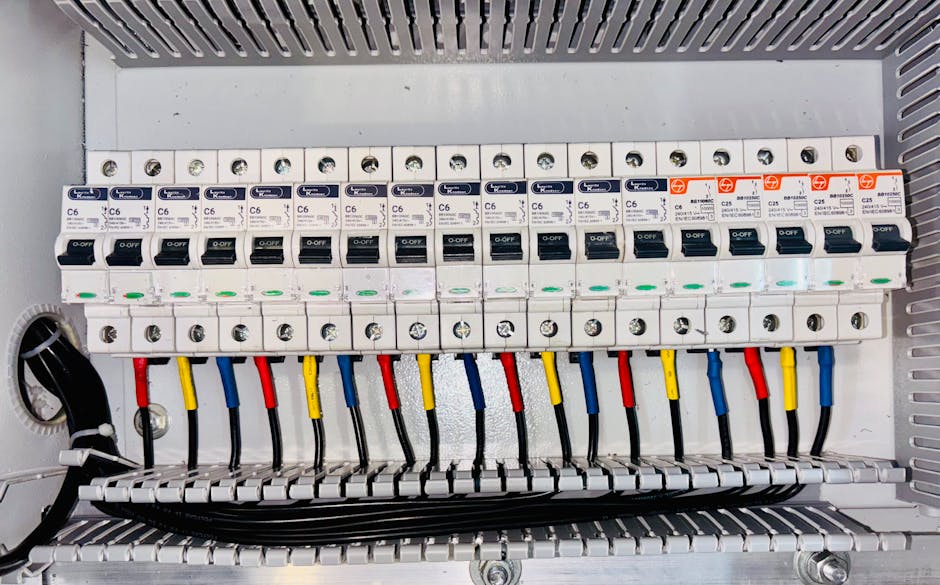
Older Raleigh homes often have another complication: the panel labels no longer match reality. A renovation from the 1980s rewired one bedroom but nobody updated the label. A kitchen remodel shifted loads around. A contractor added a dedicated circuit for a new HVAC unit but didn't mark it. These mismatches are normal in homes with any history, and they're exactly why identifying the actual culprit circuit matters as much as understanding the general cause. According to the CDC, faulty wiring and overloaded electrical systems are recurring, well-documented causes of home fires, which is why a properly functioning breaker box matters for everyday safety.
Why does my breaker keep tripping all of a sudden?
Sudden, repeated trips often point to something new entering the circuit. Maybe you added a space heater to a bedroom for winter, or installed a window AC unit in a room where you never ran AC before. Each draws significant current on its own. Stacked with existing loads, they push a circuit past its limit. Summer in Raleigh is peak AC season, and seasonal load spikes are a classic trip trigger: a compressor working harder in the heat can pull startup current higher than it used to, tripping a breaker that never bothered you in April.
A failing appliance motor also causes this pattern. If your AC compressor is working harder because of a refrigerant issue making the compressor work harder, it draws higher current under load, enough to trip a breaker that handled normal operation fine a season ago. The breaker itself can weaken with age, too. A breaker installed 10 or 15 years ago might start tripping at loads it carried comfortably when new. Once a breaker begins this pattern, replacement usually makes sense rather than endless resets.
Why does my 20 amp circuit breaker keep tripping even though there's nothing plugged in?
When a breaker trips with no visible load, assume something hardwired into that circuit is pulling current, or a fault is hiding in the walls. Hardwired appliances count: a built-in microwave, a furnace blower, an electric water heater, a well pump, or a recessed light fixture wired directly to the circuit all draw amperage with no cord in sight. A breaker feeding a bathroom can trip because a heat lamp or ventilation fan is wired in, even if you're not actively using it.
If everything on that circuit is truly unplugged and the breaker still trips, suspect a short or ground fault inside the wall. Damaged insulation, a nail driven through a wire during a renovation, a rodent-chewed line, or corrosion inside a junction box can all create a fault that trips the breaker with no external load. A breaker-wire mismatch can also be responsible: if someone installed a 20-amp breaker on wiring rated for only 15 amps, it allows more current to flow than the wire can safely carry. A weak breaker can trip below its rated amperage, even under a light or nearly absent load.
"Electrical fires often start with damaged wiring or overloaded circuits, which is why a breaker that trips with no obvious load should never just be reset repeatedly without investigating the cause."
How do I find out what keeps tripping my circuit breaker?
Start with what you observe. Reset the breaker once, then watch what's running when it trips again. An instant trip the moment you reset points to a short or ground fault, not a simple overload. A delayed trip after five or ten minutes suggests you've turned on something that overloads the circuit when it cycles.
The unplug-and-test method isolates the cause. Unplug everything on the affected circuit, reset the breaker, then plug items back in one at a time while monitoring. The device that causes a trip is your culprit. For hardwired appliances, turn them off at a wall switch or kill the circuit entirely before testing. A circuit breaker finder is a small tool that makes life easier, especially in older homes. The transmitter plugs into an outlet; you carry the receiver to the panel and it beeps when you're near the corresponding breaker. This confirms which breaker actually feeds which room, invaluable when panel labels haven't been updated in decades.
If the breaker trips with everything unplugged and all hardwired appliances off, stop testing. That points to a fault inside the wall or panel itself, and that's work for a licensed electrician. Never keep resetting a breaker that trips under zero load; it signals something beyond a device problem.
- Reset the breaker once and observe what's running when it trips again. Instant re-trip points to a short or ground fault; delayed trip suggests an overload.
- Unplug every portable device on the affected circuit and reset the breaker to confirm it holds with a zero load.
- Plug devices back in one at a time, giving the circuit 5–10 minutes to settle before adding the next. A trip at this stage identifies your culprit device.
- For hardwired appliances, turn off switches or kill the circuit breaker entirely before assuming they're not involved.
- If the breaker trips with everything off and unplugged, call an electrician. A fault inside the wall or panel requires professional diagnosis.

Why does my breaker keep tripping in one room?
Older Raleigh homes often wire several rooms onto a single 15 or 20-amp circuit. A room running a window AC, a space heater, and a hair dryer might trip that circuit under what looks like ordinary use from any single device. Kitchens and bathrooms are high-current zones and often need GFCI-protected, dedicated circuits, but in many homes they're still sharing a circuit with other outlets. A hair dryer or coffee maker sharing a circuit with other loads becomes a frequent trip culprit.
A loose connection at an outlet or switch in that room can also cause single-room trips. Resistance at a bad connection generates heat, which can trip the breaker under otherwise normal loads. These loose connections also create a fire hazard over time. If one room trips repeatedly while the rest of the house runs fine, the long-term fix usually involves running a dedicated circuit to that room rather than managing endless resets.
Is it dangerous if a circuit breaker keeps tripping?
An occasional trip under a known overload isn't an emergency. It's the safety device working as designed. But several warning signs mean you need faster action. A burning smell near the panel or at outlets, a warm or discolored panel face or outlet, a buzzing sound, or a breaker that simply won't stay reset all point to a wiring fault that needs same-day attention. A main breaker tripping, which cuts power to the whole house, is more urgent than a single branch breaker trip, since it usually signals a larger overload or a fault at the panel itself.
Repeated resets without finding and fixing the cause risk overheating wires inside the walls. Many home electrical fires start exactly this way: a fault exists, the breaker catches it and trips, the homeowner resets it, the fault heats the wiring again, the cycle repeats. Eventually the insulation fails and fire starts inside the wall where nobody sees it coming.
"Electrical fires are among the leading causes of residential fire deaths in the US, and many start with damaged wiring or overloaded circuits."
How many trips mean it's time to replace the breaker or the panel
There's no magic trip count. What matters is whether the trip has an identifiable, one-time cause versus trips with no clear pattern or recurring trips of the same type. A breaker that won't stay reset, feels warm to the touch, or trips under a load it handled fine a year ago shows internal wear and needs replacing, not another reset. Some breakers simply fail after 10–15 years of use.
Panels installed before the 1990s often struggle with modern loads. Federal Pacific and Zinsco panels, still found in some Raleigh neighborhoods, are particularly prone to internal faults. When an older panel clips along with frequent trips, the panel itself is often the bottleneck, not any single circuit. A licensed electrician can load-test a breaker and recommend whether a single breaker swap or full panel upgrade addresses the problem long-term. If you're seeing signs it's time to upgrade your electrical panel, a full diagnostic visit often pays for itself in eliminated downtime and reduced fire risk.

What to do while you wait for an electrician
Unplug or turn off whatever was running when the breaker tripped before resetting it. Resetting under the same load risks an immediate re-trip or worse, overheated wiring. Never hold a breaker in the on position or tape over the switch to keep it from tripping. The trip is the safety mechanism doing what it's designed to do. Defeating it doesn't solve the problem; it just removes the protection.
For a refrigerator, sump pump, or medical equipment that can't lose power during your troubleshooting, a portable power station or generator can bridge the gap safely until the circuit is repaired. If more than one home issue is piling up at once, like a tripping breaker alongside a slow drain or low water pressure, one technician visit can address electrical, plumbing, and HVAC all together. One call covers it all, and that saves time and coordination headaches.
- Unplug all devices on the affected circuit before attempting a reset.
- Never hold a breaker switch in the on position or use tape to hold it closed.
- For essential loads (refrigerator, medical equipment), set up a portable power station as a temporary bridge.
- Document what's plugged in, what time trips occur, and any smells or sounds you notice near the panel.
- Keep the circuit off rather than repeatedly resetting it until a technician can diagnose.
- Schedule the inspection promptly if you see warning signs like a warm panel, burning smell, or a breaker that won't reset.
Trust your Raleigh electrical team with the diagnosis
A breaker that keeps tripping is your panel telling you something specific needs attention. Get it right the first time and you prevent the costly damage that comes from ignoring it. Whether you're tracking down one stubborn 20-amp breaker or planning a full panel upgrade, no job is too small for reliable professionals who know the work. Acting early prevents the hidden fire risks and system failures that cost far more to fix later. Schedule an electrical inspection with a team that handles the electrical work alongside the rest of your home's systems, and get back to uninterrupted AC on those 95-degree afternoons.